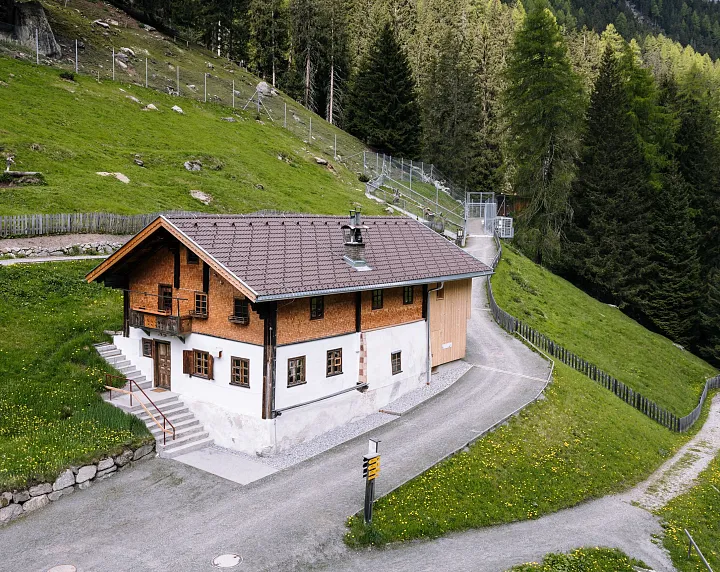
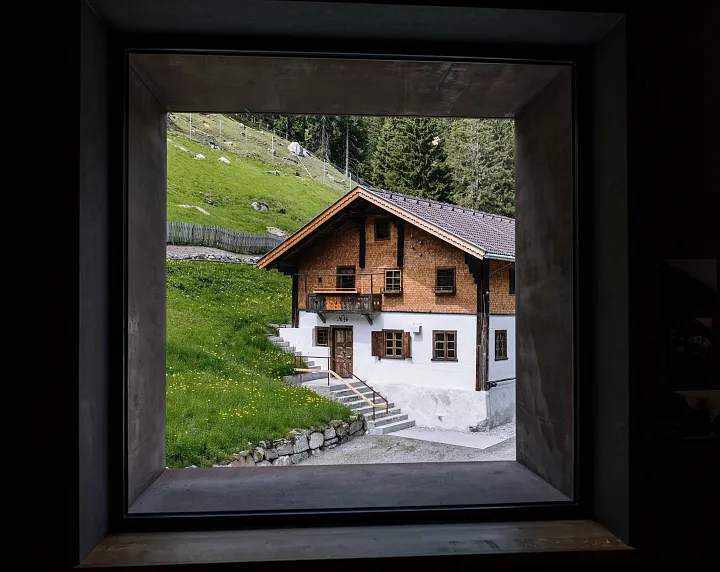
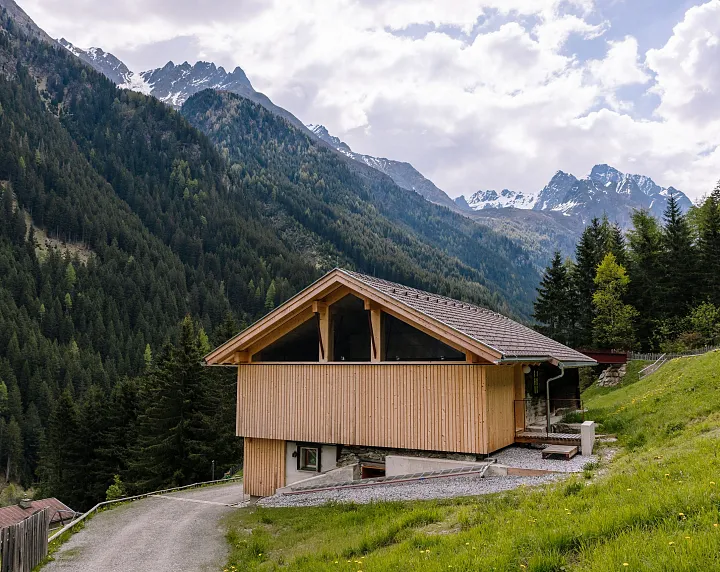
Schrofenhof
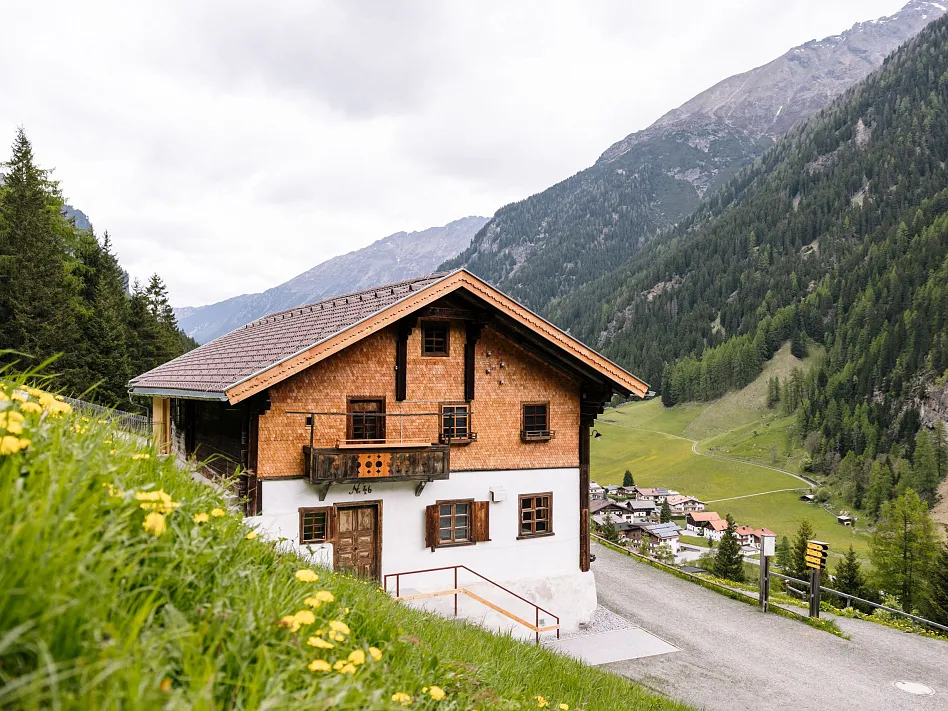
A Journey Through the History of the Pitztal Valley
The first documented reference to a farmstead at the "Schrofen" dates from April 1265. At the home of the carpenter Hartmann in Imst, Konrad von Starkenberg and Heinrich Hirschberg concluded a barter agreement in the presence of witnesses. As part of the deal, Konrad transferred, among other things, “my farmstead in the Pitztal” (“min höfh ze scruffen in puzzental”).
The document is significant in two respects: it contains the first mention of a farmstead at Schrofen and, at the same time, the oldest known reference to the Pitztal Valley. The Starkenberg family was among the most influential landowning families in late medieval Tyrol.

A Glimpse into Life on a Traditional Mountain Farm
At the Schrofenhof, visitors get a firsthand look at what life is like on a traditional mountain farm in Tyrol. Surrounded by meadows, forests, and mountains, farming has been practiced here in harmony with nature for generations.
The farm vividly illustrates everyday farm life, from caring for the animals to tending the fields. It becomes clear just how much knowledge, manual labor, and passion go into this way of life.
Guests gain fascinating insights into old traditions and sustainable practices that are still preserved today. In this way, the Schrofenhof becomes a place where the history and present of Alpine agriculture come to life.

Birthplace of Josef Schöpf
Josef Schöpf (1886–1915) from St. Leonhard in the Pitztal is considered one of the region’s most important early photographers. Using simple means, he created striking photographs that authentically capture the people, landscape, and everyday life in the Pitztal at the beginning of the 20th century.
His photographs combine artistic merit with folkloric value and document a time of change without losing sight of traditional ways of life. Although Schöpf was killed in action during World War I in 1915, his work is today regarded as an important visual record of the Pitztal.